What you need to know
- Social media targets by who someone is. Letterbox targets by where they live. For local service businesses, geography is usually the more useful filter.
- A flyer sits on the kitchen bench for two or three days. A social ad lasts half a second in a scroll. The dwell time difference is real and shows up in response data.
- Letterbox response rates of 0.5 to 2% compare favourably to social media's 0.1 to 0.5% for equivalent local service categories when the geographic match is strong.
- Audiences over 45 engage with letterbox at materially higher rates than younger demographics, and they tend to have higher disposable income and more established purchasing patterns.
- Combined campaigns, letterbox to every household in a suburb plus social retargeting to the same postcode, consistently outperform either channel running alone.
The question comes up regularly. A business owner is spending money on Facebook and Instagram ads, they get a quote for a letterbox drop, and they want to know which one is the better investment. The honest answer is that both channels have a role, and the right one depends on your business, your suburb, and your customer.
What follows is the actual comparison, not the one that favours either channel for its own sake.
How does each channel target people?
Social media targets by interest and behaviour. Facebook and Instagram let you define audiences by age, household income bracket, interests, purchase behaviour, and lookalike audiences modelled on your existing customers. That is powerful when what you are selling is driven by who the person is, not where they live.
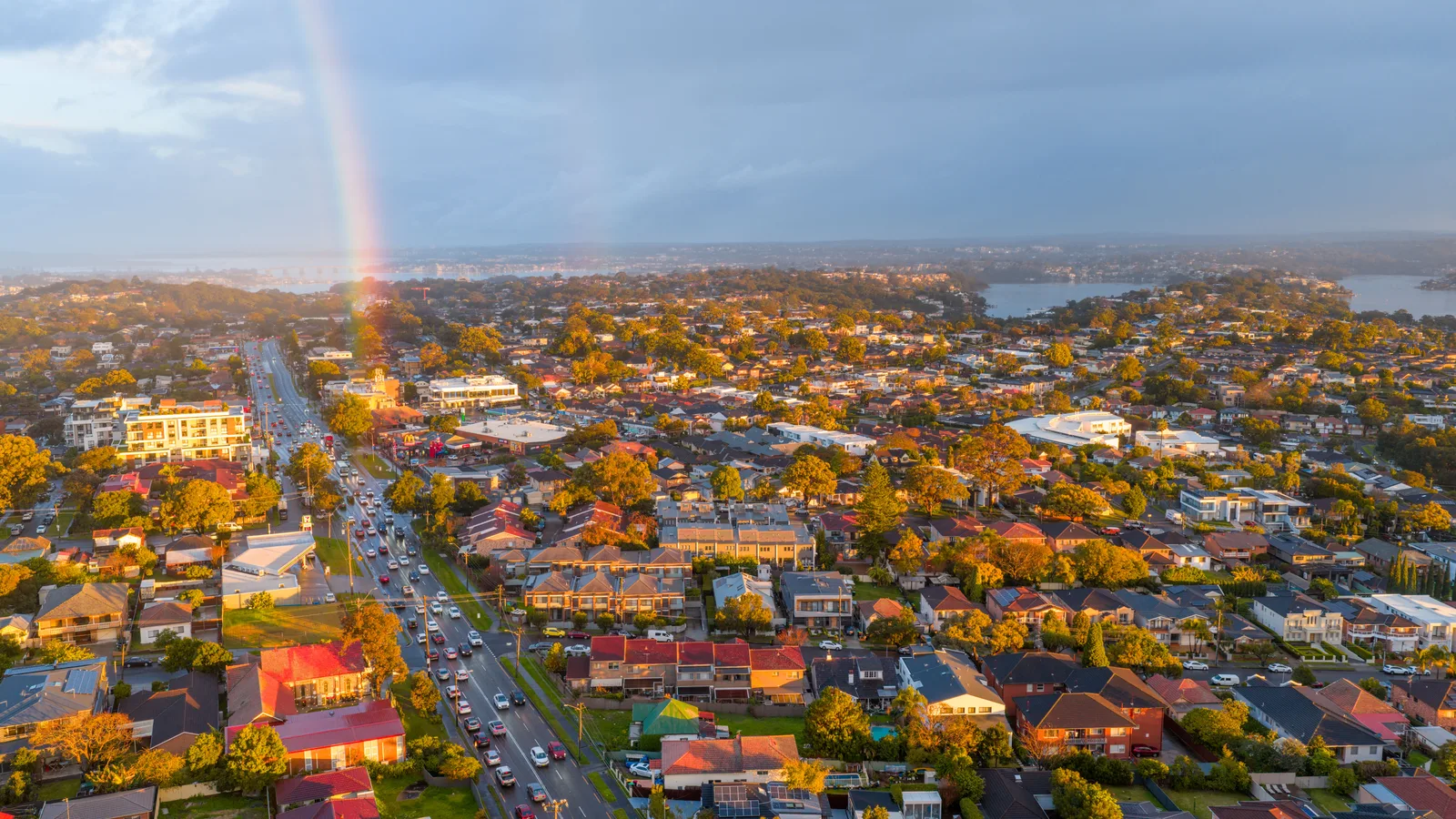
Letterbox targets by geography. Every household in Sutherland Shire, or every house within 2km of your shop, or every street in a specific postcode. That is powerful when what you are selling is driven by proximity. Trades, food delivery, medical and dental, childcare, property management, local retail. The buying trigger is not who the person is. It is that they are nearby and have a need.
For local Sydney businesses where the customer has to physically come to you or you have to physically go to them, geographic targeting is usually more valuable than demographic targeting. You do not need to find the right person on the internet. You need to reach every household within your service radius.
Frequency and persistence
A Facebook ad exists for as long as your campaign budget keeps running. Stop paying, stop appearing. A flyer in someone's hand sits on the kitchen bench for two or three days. Their partner sees it. It gets refrigerator-pinned if the offer is relevant. It gets put aside for when they need the service.
This dwell time is genuinely different. A social media ad is seen in a half-second scroll. A flyer is held, read, and physically present in the home. The psychology of the two interactions is not equivalent, and that difference shows up in the response data.
“A flyer in the home is a physical object in a place where decisions are made. A social ad is a half-second scroll in a feed full of dogs doing surprising things. The impression quality is not equivalent.”
Cost per impression: what do the numbers actually look like?
Facebook and Instagram advertising in Sydney typically runs at $5 to $15 CPM, meaning $5 to $15 per thousand ad impressions. That sounds cheap until you factor in that most of those impressions are half-second scrolls by people who will never remember seeing your ad.
Letterbox distribution costs $150 to $200 per thousand flyers delivered (print plus distribution). That is a higher cost per impression on paper. But a delivered flyer is a tangible object in a person's hand in a home where they make purchasing decisions. The impression quality is not comparable to a social media scroll-past.
The cost comparison that actually matters is cost-per-response or cost-per-call, not cost-per-impression. For local service businesses, letterbox typically delivers 0.5 to 2% response rates. Social media for equivalent local services typically delivers 0.1 to 0.5%. Those ranges overlap depending on the quality of creative and the specificity of targeting, but letterbox holds up well on a cost-per-enquiry basis when the geographic match is strong.
The scroll problem
Australians see somewhere between 4,000 and 6,000 advertising impressions per day. Most of that is digital. Your Facebook ad competes not just with other advertisers but with friends' holiday photos, news updates, sporting results, and videos of dogs doing surprising things. The competition for attention in a social feed is total.
A flyer through the door has zero competition in the letterbox. When a person walks to their letterbox in the morning, what they find is what they engage with. There is no algorithm deciding whether to show it to them. There is no other advertiser bidding for that moment. It arrives.
When does social media win?
Social media has real advantages in specific situations. Time-sensitive promotions where you need to reach people within 24 hours of running the campaign. National or multi-city brands where geographic distribution of physical material is not practical. Audiences that are heavily concentrated in the under-35 demographic who are not heavy letterbox engagers. Visual products where a scrollable video or image carousel does the selling better than a printed page.
For those cases, social media is the stronger channel. The targeting precision, speed of deployment, and cost of reaching a young metropolitan audience is hard to match with print.
When does letterbox win?
Geographic targeting is the primary factor. If your customers need to be within a specific radius of your business or your service area to be relevant, letterbox delivers that precision without the waste of broad demographic targeting that might reach people in the right age bracket but the wrong suburb.
High-value local services also favour letterbox. Real estate, legal services, renovation, specialist medical. These are decisions where credibility matters. A well-designed, professionally printed flyer carries a level of physical authority that a social media ad does not. Holding something physical creates a different trust signal than seeing a banner in a feed.
Audiences over 45, and particularly over 55, engage with letterbox at materially higher rates than younger demographics. For businesses serving that demographic, letterbox is often the highest-return channel available. It reaches people who are not heavy social media users and who tend to have higher disposable income and more established purchasing patterns.
The combined approach that produces the best results
Gibson's most effective campaigns use both channels together. Letterbox distribution goes to every household in the target suburb. That plants the brand in physical form in the home. The same suburb is then targeted with social media retargeting for anyone in that postcode who visits the website.
The letterbox creates the first impression. The social ad reinforces it. By the time a household sees the retargeted social ad, they may have already seen the flyer on the kitchen bench. The second impression lands harder because the brand is already familiar. Conversion rates on combined campaigns consistently exceed either channel running alone.
How to measure both channels properly
A tracked phone number on the letterbox flyer tells you exactly how many calls that drop generated, which suburbs responded, and what the cost-per-call was. UTM parameters on the social campaign URLs tell you how many website visits and conversions came from those ads. You can put both numbers in the same spreadsheet and make a direct comparison.
Most businesses running both channels without tracking are making budget decisions based on feeling. With tracked numbers on print and UTMs on digital, you have actual data. Over three or four campaigns, the pattern becomes clear and you can allocate budget where it produces results rather than where it produces comfort.
If you want to understand what a tracked letterbox campaign would cost and what kind of response rate is realistic for your suburb and service type, visit the letterbox distribution page or book a free call audit and we will walk through it with you.
Frequently asked questions
Is letterbox distribution still effective in 2026?
Yes, particularly for local service businesses where the customer needs to be nearby. For trades, medical, dental, childcare, and property management, geographic targeting is more valuable than the demographic targeting social media offers.
What does letterbox distribution cost compared to social media advertising in Sydney?
Letterbox distribution runs at roughly $150 to $200 per thousand flyers delivered including print. Facebook and Instagram CPM is $5 to $15, but the comparison that matters is cost-per-enquiry, not cost-per-impression. For local service businesses with strong geographic match, letterbox holds up well on a cost-per-call basis.
Which channel has a better response rate for local businesses?
For local service businesses, letterbox typically delivers 0.5 to 2% response rates. Social media for equivalent local services typically delivers 0.1 to 0.5%. Those ranges overlap depending on creative quality and targeting precision.
Which demographic responds better to letterbox versus social media?
Audiences over 45, and particularly over 55, engage with letterbox at materially higher rates than younger demographics. For businesses serving that demographic, letterbox is often the highest-return channel available.
Does combining letterbox and social media advertising work better than either alone?
Consistently yes. Letterbox creates a physical first impression in the home. Social media retargeting to the same postcode reinforces it. When a household sees a retargeted social ad after already seeing the flyer on the bench, the second impression lands harder and conversion rates exceed either channel running alone.